
Close Menu
    Facebook X (Twitter) Instagram
    SciTechDaily
    • Biology
    • Chemistry
    • Earth
    • Health
    • Physics
    • Science
    • Space
    • Technology
    Facebook X (Twitter) Pinterest YouTube RSS
    SciTechDaily
    Home»Physics»Common Metal Could Unlock a Cheaper Path to Quantum Materials
    Physics

    Common Metal Could Unlock a Cheaper Path to Quantum Materials

    By The University of OsakaOctober 3, 20262 Comments3 Mins Read
    Facebook Twitter Pinterest Telegram LinkedIn WhatsApp Email Reddit
    Share
    Facebook Twitter LinkedIn Pinterest Telegram Email Reddit
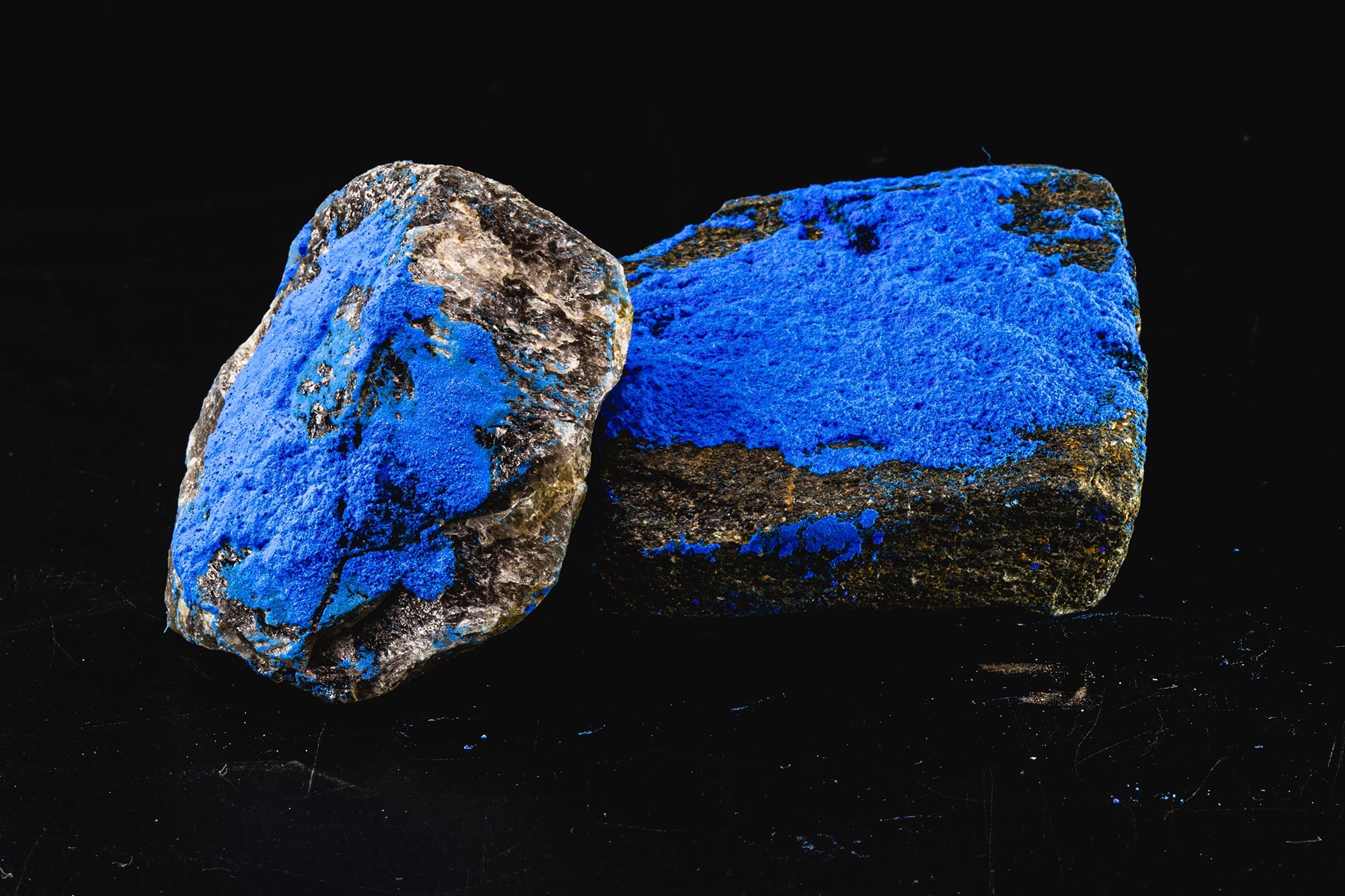
    Cobalt Mineral Chemical Element
    Cobalt is a widely used transition metal valued for its magnetic properties, durability, and role in technologies ranging from batteries to superalloys. It is more abundant and generally less costly than other commonly used metals such as ruthenium and iridium. Credit: Shutterstock

    Researchers have created a cobalt-based thin film in which local honeycomb structures generate strong magnetic interactions linked to Kitaev-type quantum materials.

    A common metal may offer a cheaper route to materials used in quantum research. Scientists created a thin film in which cobalt atoms form local honeycomb patterns and generate strong magnetic interactions linked to Kitaev materials.

    The material is based on sodium antimonate (NaSbO3), which already has a layered honeycomb structure. Adding about 4% cobalt produced localized CoO6 honeycomb motifs without disrupting the larger crystal.

    Replacing Rare Metals

    Kitaev materials are studied because some may support quantum spin liquids, unusual states in which atomic spins remain dynamic instead of settling into conventional magnetic order. Research has often relied on compounds containing scarce metals such as ruthenium and iridium.

    “Previous work in this area has largely been limited to rare metals like ruthenium and iridium,” says lead author Hao-Bo Li. “We asked whether cobalt, one of the most common transition metals on Earth, could be made to form the same honeycomb structure and display the same intriguing physics.”
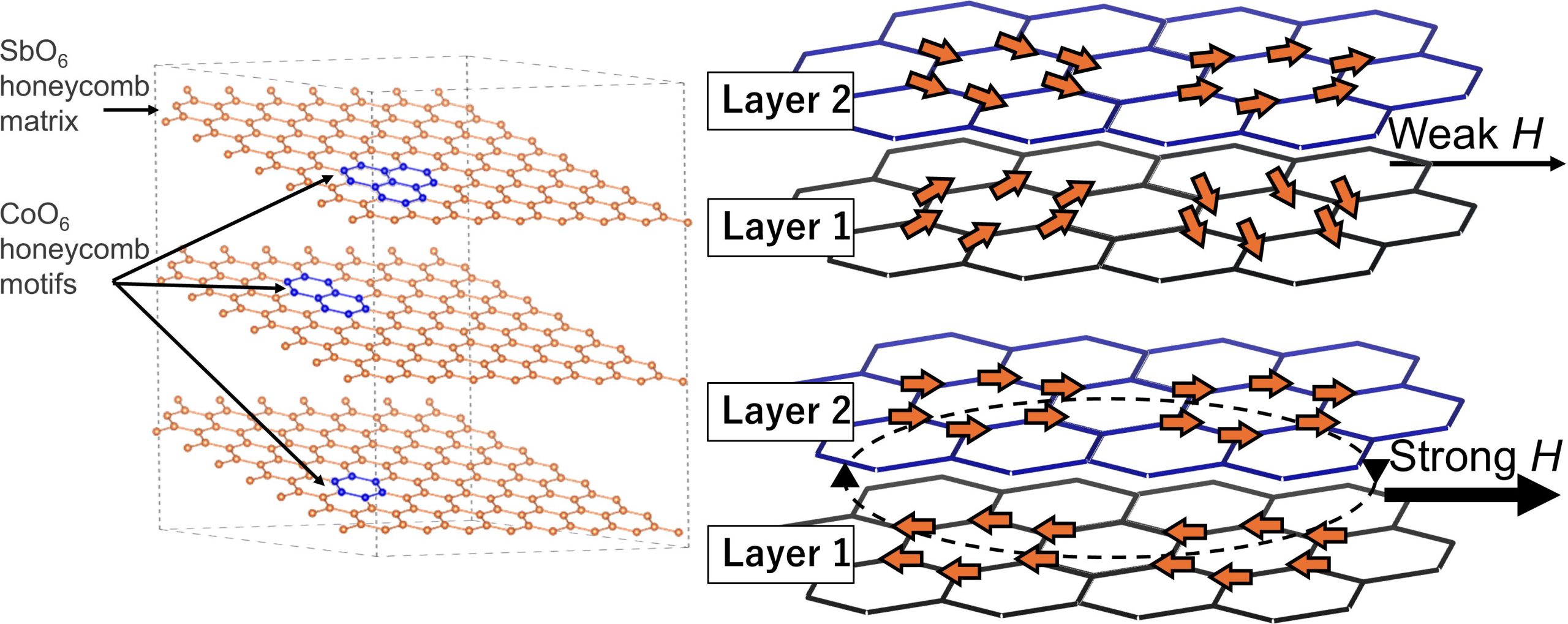
    Cobalt Honeycomb Structure Quantum Computing
    Cobalt honeycomb structure is stabilized within a known oxide possessing a honeycomb structure. Furthermore, a ferromagnetic ground state has been discovered while the interlayer coupling is antiferromagnetic. Credit: Reprinted with permission from H.-B. Li, et al. Ferromagnetic-like behavior emerging from local CoO6 honeycomb motifs in Co-doped NaSbO3 thin films. Phys. Rev. M 10, 054418 (2026). © 2026 American Physical Society.

    Cobalt Forms the Structure Naturally

    Microscopy confirmed that the cobalt atoms clustered into the predicted honeycomb motifs without creating unwanted secondary phases.

    “What excites us is that these cobalt honeycombs appear to form naturally, without any special coaxing,” explains senior author Hidekazu Tanaka. “They even produce a clear magnetic signal that matches what theory predicts for this type of structure.”

    Magnetic measurements showed a ferromagnetic-like state near 88 K, or about minus 301 degrees Fahrenheit. Calculations indicate that this behavior comes from the local arrangement of cobalt atoms within the CoO6 structures.

    A More Accessible Quantum Material

    The material has not been shown to host a quantum spin liquid, but it provides a cobalt-based system for studying Kitaev-type magnetism without relying on rare metals.

    “Cobalt is relatively cheap, widely available, and already used in semiconductor manufacturing,” remarks Li. “This approach could eventually lead to quantum computing components that are far more practical to produce at scale.”

    The researchers are now working to further engineer the material and test its quantum properties in greater detail.

    Reference: “Ferromagnetic-like behavior emerging from local honeycomb motifs in Co-doped thin films” by Hao-Bo Li, Weitao Yan, Shunsuke Kobayashi, Kousuke Ooe, Takahiro Ozawa, Hidefumi Takahashi, Shintaro Ishiwata, Chengchao Zhong, Tong Zhu, Wei-Hua Wang, Hiroshi Takatsu, Hiroshi Kageyama and Hidekazu Tanaka, 22 May 2026, Physical Review Materials.
    DOI: 10.1103/54cx-6r5s

    Never miss a breakthrough: Join the SciTechDaily newsletter.
    Follow us on Google and Google News.

    Magnetism Nanotechnology Quantum Computing Quantum Physics University of Osaka
    Share. Facebook Twitter Pinterest LinkedIn Email Reddit

    Related Articles

    Physicists Solve Major Challenge in Quantum Synchronization

    MIT Pioneers Quantum Light Source for Optical Quantum Computers and Teleportation Devices for Communication

    Ultra-Thin Designer Materials Unlock Elusive Quantum Phenomena With Huge Impact for Quantum Computing

    Mysterious New State of Matter – Quantum Spin Liquids – Could Enable Next-Generation Quantum Computing

    New Research Provides Clearest Evidence Yet of Majorana Particle

    New System Converts Laser Beam Into Controlled Stream of Single Photons

    Quantum Bits Store Data for Nearly Two Seconds Using Laboratory Grown Diamonds

    Scientists Switch On and Off Magnetism Using Quantum Mechanics

    Evidence of Elusive Majorana Fermions Raises Possibilities for Quantum Computing

    2 Comments

    1. Gary R. Bostic on October 3, 2026 7:55 pm

      Would lie to have better understanding of this. I am 79 years old…….this is over my education level !!!

      Reply
      • Bao-hua ZHANG on October 4, 2026 7:02 pm

        You are right. If this link still works, please browse: https://zhuanlan.zhihu.com/p/2088659998394077633.

        Ladies and gentlemen,” he spread his arms as if embracing the entire world, his voice dripping with unquestionable divinity, “we no longer need to understand how God plays dice. We only need to learn to embrace uncertainty, and we don’t even need to know why. Quantum entanglement, the ‘spooky’ ghost that once baffled Einstein, has now become the source of our computing power. It does not need to be understood; it only needs to be consumed.”

        What Are The Quantum Materials? The audience applauded like a tide. On the screen behind him, a menacing black cat skeleton pulsed with an eerie glow, like some cyberpunk totem.

        Reply
    Leave A Reply Cancel Reply

    • Facebook
    • Twitter
    • Pinterest
    • YouTube

    Don't Miss a Discovery

    Subscribe for the Latest in Science & Tech!

    Trending News

    This Honeybee Silk Film Could Transform How Chronic Wounds Are Treated

    Homo erectus Was Outnumbered 10 to One by Another Human Relative

    The Strongest Dementia Risk Signal May Be Hiding in Your Muscles

    Just 7 Days of Strength Training Triggered Fat-Burning Changes in Mice

    Spinosaurus May Have Spent Most of Its Life Underwater, New Study Finds

    Einstein Probe Discovers a Secret Phase of Neutron Star Collisions

    Scientists Watch New Particles “Pop Into Existence” on a Quantum Computer

    The More Ultra-Processed Food People Ate, the Higher Their Risk of Disease and Death

    Follow SciTechDaily
    • Facebook
    • Twitter
    • YouTube
    • Pinterest
    • Newsletter
    • RSS
    SciTech News
    • Biology News
    • Chemistry News
    • Earth News
    • Health News
    • Physics News
    • Science News
    • Space News
    • Technology News
    Recent Posts
    • NASA’s Bennu Samples Reveal a Surprising Origin Story
    • Earth and Mars Were Formed in Fundamentally Different Ways, Study Finds
    • NASA’s Perseverance Rover Finds Mars Had a Far More Complicated Water History Than Expected
    • Noninvasive Cancer Treatment Looks Safe, yet 11% of Patients Died Within a Month
    • Why Do Muscles Weaken With Age? Scientists May Have Found an Important Missing Piece
    Copyright © 1998 - 2026 SciTechDaily. All Rights Reserved.
    • Science News
    • About
    • Contact
    • Editorial Board
    • Privacy Policy
    • Terms of Use

    Type above and press Enter to search. Press Esc to cancel.